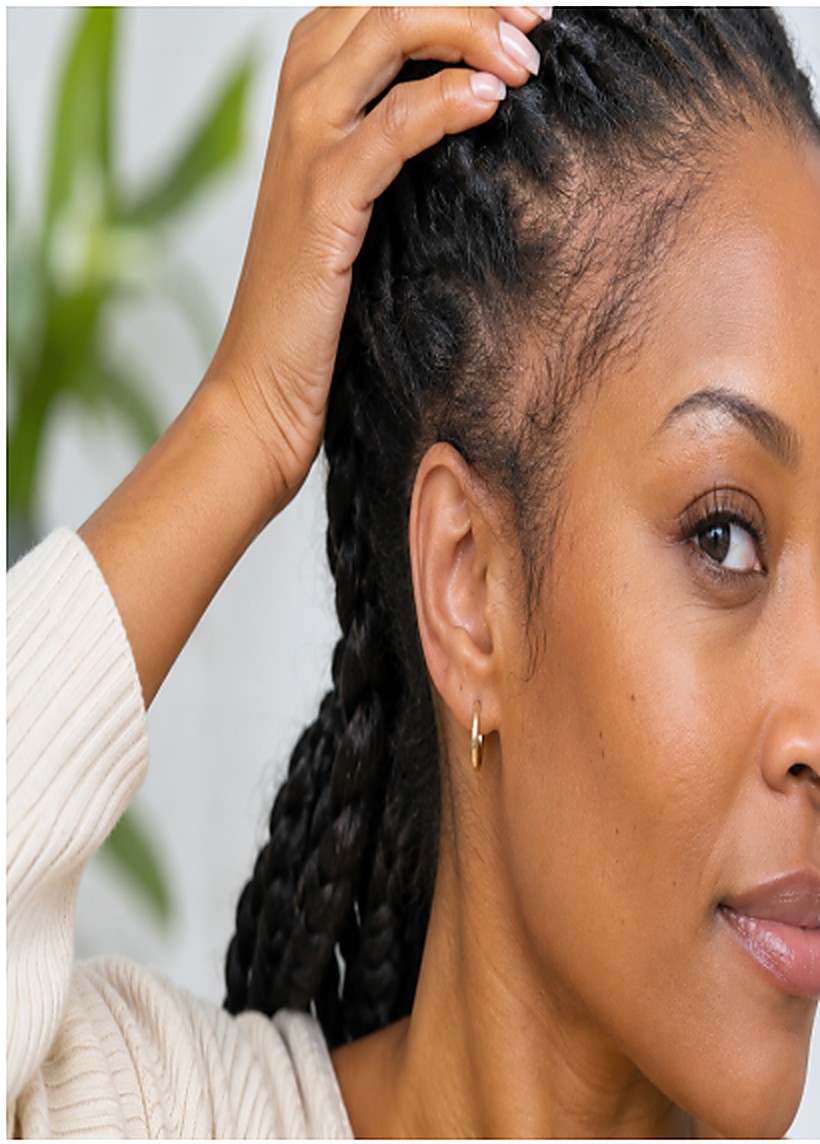
Causes, early warning signs, and options for protecting your hairline and supporting hair restoration.
Hair loss caused by repeated pulling on the hair
Traction alopecia is a form of hair loss that develops when repeated tension pulls on the hair and stresses the follicles. It commonly affects the edges, temples, and hairline, although any area exposed to prolonged pulling can be affected.
Tight ponytails, braids, buns, weaves, extensions, and other styles that place continuous stress on the roots may contribute to this condition. Over time, persistent tension can lead to inflammation, breakage, thinning, and sometimes permanent follicle damage.
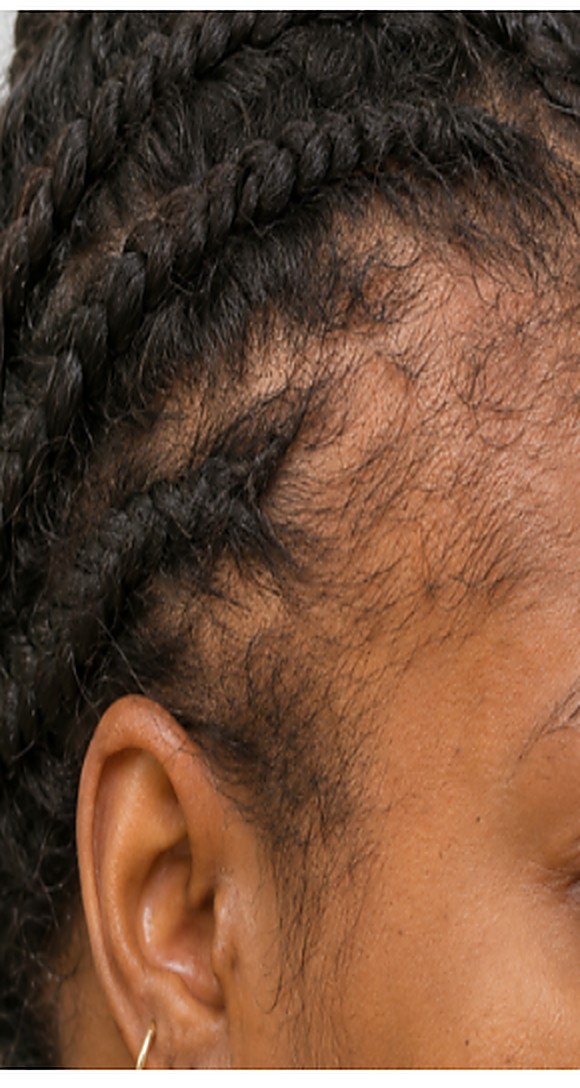
Recognizing changes early can help protect the follicles
The earliest changes may be subtle: short broken hairs at the edges, a widening or receding hairline, scalp tenderness after styling, or small bumps where hair is pulled tightly. With ongoing tension, thinning may become more noticeable and the scalp more visible.
Prevention begins with reducing tension. Choose looser styles, avoid heavy extensions, vary where hair is parted or secured, and take discomfort seriously. A hairstyle should not cause pain, redness, or persistent pulling.
Early changes may improve when tension is removed
When traction alopecia is recognized early and the follicles remain intact, hair may recover after the pulling stops. Long-standing traction can produce scarring, however, and that hair loss may be permanent. This is why early evaluation matters.
A dermatologist can evaluate the condition, check for other forms of alopecia, and discuss evidence-based treatments when appropriate. In cases with persistent redness, tenderness, scaling, or shiny areas without follicular openings, a medical assessment is particularly important.
A personalized approach to scalp health and hair care
At Trichology By Shawn, a consultation includes a review of your hair concerns, styling history, and visible scalp and hair characteristics. Digital scalp imaging can help document the appearance of the hairline and support progress monitoring over time.
We focus on scalp care, tension-reducing hair practices, and individualized non-surgical support. Professional scalp services and hair care products may be included based on your needs, but they do not reverse scarred follicles. When medical diagnosis or treatment is needed, referral to a dermatologist is recommended.
Hairline changes deserve attention. Understanding what is causing your hair loss is the first step toward making an informed plan.
Book with Shawn at Chameleon Salon in Montrose or Primary Care 4 Hair in Newport Beach. Call (818) 790-9858 or send a message.
Book a Consultation